
Vietnam Simplifies Business Conditions Under Amended Investment Law
NEWS & UPDATE
1/13/20264 min read
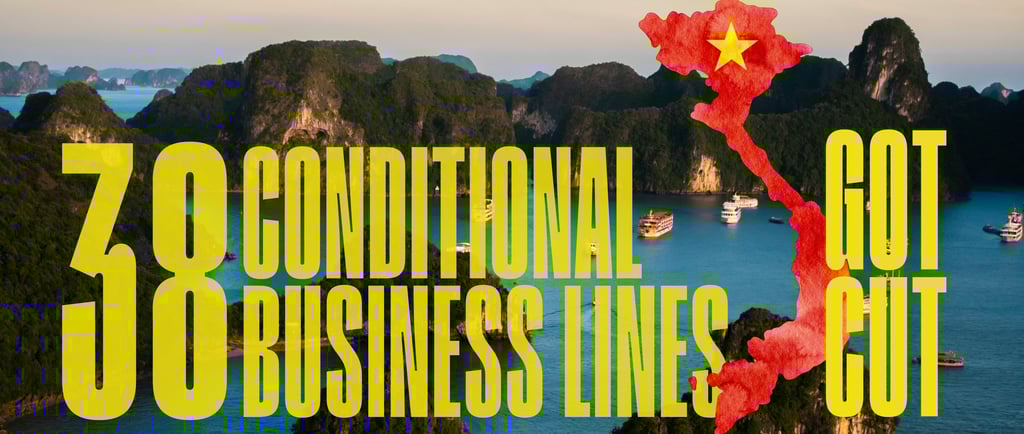
Vietnam has taken a major step to improve its business environment by amending the Law on Investment. The reform focuses on reducing administrative burden by cutting unnecessary licensing requirements. A key highlight is the removal of 38 conditional business lines and the revision of 20 others, making it easier for startups and small-to-medium enterprises (SMEs) to enter the market and operate compliantly.
These changes are designed to lower entry barriers, reduce costs, and support entrepreneurship, while still maintaining oversight in sensitive sectors.
What Are Conditional Business Lines?
In Vietnam, a business line defines the activities a company is allowed to carry out, as stated in its enterprise registration. Some activities are classified as conditional business lines. This means a company may only operate in these sectors after meeting specific legal requirements.
Typical conditions include:
Minimum legal capital
Professional qualifications or certifications
Technical or facility standards
Special licenses or permits
These requirements apply because such activities may affect public interests such as national security, public health, social order, or consumer protection.
Common conditional sectors include banking, insurance, education, healthcare, transportation, telecommunications, and security services. In these fields, registering a company alone is not enough. Businesses must also obtain approval from relevant authorities before operating. Failure to comply can result in fines, suspension, or forced closure.
The official list of conditional business lines is set out in Appendix IV of the Law on Investment. Under the previous framework, Vietnam had more than 230 conditional business lines. If an activity is not on this list and is not prohibited, it is considered an ordinary business line and can be conducted after simple registration.
For startups and SMEs, identifying whether an activity is conditional is a critical early step, as it directly affects timelines, costs, and compliance planning.
Key Changes Under the Amended Investment Law
In December 2025, the National Assembly passed an amended Law on Investment to improve the ease of doing business. The most significant change is the restructuring of conditional business lines:
38 conditional business lines removed
20 conditional business lines revised
Total number reduced from 234 to 196
The remaining conditional business lines are mainly concentrated in sensitive sectors such as finance, banking, insurance, construction, agriculture, transportation, and other regulated industries.
Removal of 38 Conditional Business Lines
Business activities removed from the conditional list will no longer require sector-specific licenses before operation. Companies can begin operating after enterprise registration, provided they comply with general laws and standards.
These removed lines cover a wide range of services, including:
Certain tax and customs services
Insurance support services
Inspection and technical services
Selected import–export activities
Energy auditing
Employment and labor outsourcing
Automobile maintenance
Architecture and construction-related services
Data center services
Study-abroad consulting
Non-endangered wildlife trading
Cosmetic surgery services
Art performance and event organization
Land information system IT services
This change significantly reduces setup time and compliance costs, especially for service-based businesses.
Revision of 20 Conditional Business Lines
For 20 other business lines, conditions have been narrowed or restructured. A major policy shift is the move from pre-approval to post-inspection.
Instead of requiring licenses before starting operations, businesses may operate once they meet publicly announced conditions. Authorities will then monitor compliance through inspections.
To support this approach, the government will issue two lists:
List 1: Business lines that still require licenses before operation
List 2: Business lines where licensing is abolished and compliance is checked through post-inspection
This reflects a shift from “license first, business later” to “operate if compliant, inspect afterward.”
The amended law takes effect on March 1, 2026, while the new conditional business line framework applies from July 1, 2026. During this transition period, businesses should closely follow new decrees and guidance.
What This Means for Startups and SMEs
Faster Market Entry
Businesses operating in newly deregulated sectors can start sooner, without waiting weeks or months for additional licenses. This is especially valuable for startups with limited time and capital.
Lower Costs and Simpler Procedures
Fewer licenses mean fewer documents, lower legal fees, and less administrative effort. SMEs without in-house legal teams benefit most from this simplification.
New Opportunities in Previously Restricted Sectors
Easier entry is expected to attract more startups into sectors such as data services, HR services, professional consulting, and creative industries.
Increased Competition and Innovation
Lower barriers allow smaller and more specialized players to compete with larger firms. This encourages innovation and improves consumer choice.
Compliance Still Matters
Although pre-licensing is reduced, regulations have not disappeared. Many sectors are now managed through inspections after operations begin. Businesses must maintain compliance on an ongoing basis.
Benefits for Foreign Investors
Foreign-invested enterprises also benefit from simplified procedures, including the ability to establish a company before obtaining an Investment Registration Certificate in certain cases. However, market access restrictions and ownership limits may still apply in specific sectors.
Best Practices for Businesses
To navigate the new framework effectively, startups and SMEs should:
Check business lines early
Review whether your activities are conditional under the updated lists expected in 2026.Understand specific requirements
Conditions vary by sector. Knowing the exact standards is essential, even under post-inspection regimes.Use official government sources
The National Business Registration Portal and ministry websites provide the most reliable updates.Prepare for inspections
Maintain proper records, internal controls, and compliance processes from day one.Seek professional advice when needed
Advisors can help clarify complex or grey areas, especially for foreign-invested businesses.Monitor legal updates
New decrees will define how the reforms are applied in practice. Staying informed reduces transition risks.
Conclusion
Vietnam’s amendment to the Law on Investment represents a clear move toward a more open and business-friendly environment. By removing 38 conditional business lines and simplifying many others, the government has reduced entry barriers, cut compliance costs, and shortened the path from business idea to operation.
At the same time, the shift toward post-inspection places greater responsibility on businesses to comply consistently with legal standards. For startups and SMEs, this reform creates real opportunities—provided they remain proactive, informed, and compliant.
Overall, the message is clear: Vietnam is making it easier to do business. With proper preparation, entrepreneurs and investors are well positioned to benefit from this more flexible and transparent regulatory framework.
Expert support for your business in Vietnam.
© 2026. All rights reserved.