
Vietnam’s Textile and Garment Industry: 2026 Outlook and Strategic Positioning
NEWS & UPDATE
1/27/20265 min read
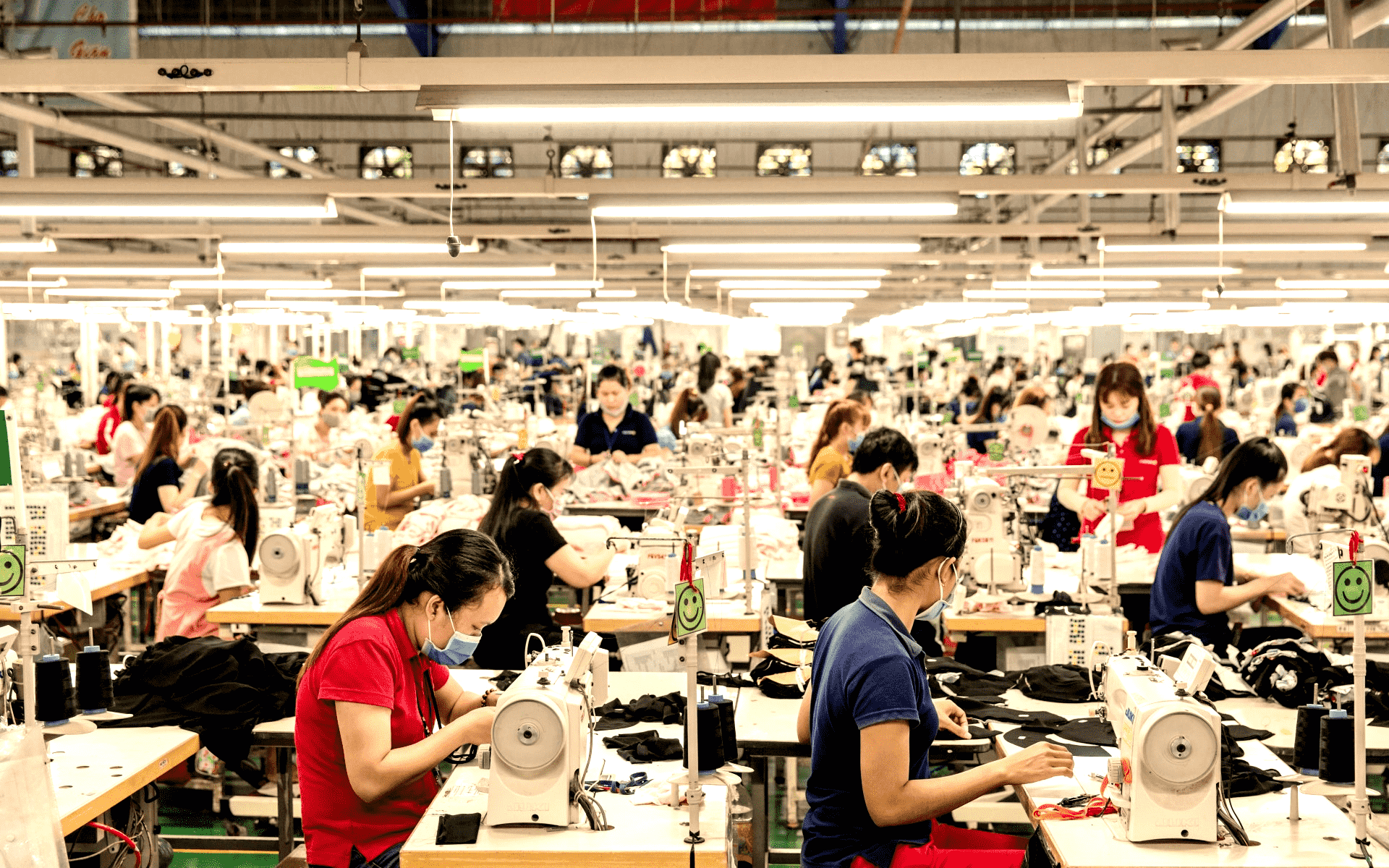
Vietnam’s textile and garment industry remains a foundational pillar of the national economy. Employing approximately 2.7 million workers, the sector accounts for around 16% of the country’s export revenue. Following a period of global disruption, the industry demonstrated strong resilience and regained momentum in 2025, reaching an export value of approximately USD 46 billion—an increase of 5–7% year-on-year—and achieving a record trade surplus of USD 21 billion. This performance reinforces Vietnam’s position as the world’s third-largest apparel exporter, behind China and Bangladesh. From 2020 to 2025, export value grew from roughly USD 35 billion to USD 46 billion, reflecting a compound annual growth rate (CAGR) of approximately 5.6%. Industry projections indicate exports may approach USD 48 billion by the end of 2026, although profit margins remain under pressure due to input cost inflation and U.S. tariffs of 20–40% on Vietnamese apparel.
Growth Drivers
Vietnam’s sustained expansion in textiles and garments is supported by structural advantages:
1. Broad Free Trade Agreement (FTA) Network
Vietnam’s portfolio of more than 16 trade agreements—including EVFTA, CPTPP, RCEP, and the UK–Vietnam FTA—provides substantial tariff benefits and preferential access to key consumer markets. These agreements significantly enhance the competitiveness of Vietnamese exports through duty-free or quota-free entry.
2. Global Supply Chain Diversification
As brands diversify sourcing away from China, Vietnam continues to be a preferred alternative due to its political stability, competitive labor costs, and established manufacturing ecosystem. In early 2025, Vietnam became the top apparel supplier to the United States, reaching USD 9.5 billion in imports (January–July), up 17% year-on-year, while China’s exports to the U.S. declined 21%.
3. Technological Upgrading
With wages now averaging USD 300 per month—higher than Bangladesh (USD 95) and India (USD 145)—firms are accelerating digitalization and automation. Many manufacturers have adopted robotics, AI-assisted sewing systems, and advanced machinery to increase productivity and reduce reliance on manual labor.
4. Transition to Higher-Value Products
The industry continues to shift from basic cut–make–trim (CMT) operations toward higher-value manufacturing. Apparel accounts for nearly 80% of export revenue, while technical textiles and value-added fabrics are expanding. A growing number of companies are transitioning from OEM to ODM/OBM to build brand identity and design capabilities.
Additional growth factors include a rising skilled workforce, supportive government policy, and increasing localization of raw materials, now estimated at 52–60%.
Export Performance and Key Markets
Vietnam’s textile and garment exports reached USD 46 billion in 2025, up roughly 5–6% from 2024. The industry aims for USD 47–48 billion in exports in 2026, representing potential growth of 6–9%. Major export destinations include:
United States
The U.S. remains Vietnam’s largest market, accounting for about half of total export value. From January to September 2025, shipments reached USD 13.4 billion. However, tariffs of 20–40% and stricter measures on transshipment and origin verification pose ongoing challenges.
European Union
The EVFTA provides significant tariff advantages but requires strict compliance with rules of origin. Although demand softened in 2023–2024, modest recovery has begun. Vietnam competes with Bangladesh, which enjoys full duty-free access under the EU’s Everything-But-Arms (EBA) scheme.
Japan and South Korea
Stable demand and bilateral FTAs support continued strong sales—USD 3.3 billion to Japan and USD 2.2 billion to Korea in 2024.
Emerging Markets
Exports to the Middle East, South Asia, and Africa are rising, supported by expanded tariff preferences and regional agreements such as RCEP.
Domestic Market Opportunities
Although export-driven, the sector is increasingly targeting domestic demand as incomes rise and retail channels expand.
Key local trends include:
Brand Development: Companies are investing in design and brand-building to reduce reliance on contract manufacturing.
E-Commerce Growth: Fashion is one of the fastest-growing online retail segments, supported by a USD 269 billion retail market in 2025.
Government Support: Policies aim to increase the sector’s domestic market share to USD 8–9 billion by 2030 through promotional events, fashion weeks, and incentives for higher-value production.
Competition from low-priced imports remains a challenge, prompting efforts to strengthen distribution and enhance product quality.
Foreign Direct Investment and Financing
Vietnam remains one of Asia’s most attractive destinations for textile and garment investment. Between 2018 and 2025, the country received more than USD 4.6 billion in new greenfield textile projects—more than any other regional competitor. Newly registered FDI across all sectors reached USD 38.4 billion in 2025, with manufacturing accounting for over half.
Major investors include Singapore, China, Japan, and South Korea, with many firms relocating from China to circumvent U.S. tariffs.
While financing conditions have improved due to policy reforms and bank support for exporters, high interest rates and collateral requirements continue to constrain smaller suppliers.
Supply Chain and Production Dynamics
Vietnam maintains several competitive advantages but faces notable structural challenges:
High Raw Material Dependence: Nearly all cotton and synthetic fibers are imported, primarily from China, India, and South Korea. Although localization efforts have improved fabric production to 52–60%, backward integration remains a strategic priority.
Rising Costs: Labor costs have grown 10% annually, and overall production costs are 40–45% higher than in Bangladesh or Indonesia, although higher productivity helps to offset some of this gap.
Logistics Bottlenecks: Port congestion, freight volatility, and container shortages continue to drive up lead times.
Modernization: Automation and lean manufacturing have boosted efficiency; some factories report a 4–5x increase in output per worker after adopting new systems.
Sustainability and Green Transformation
Growing emphasis on ESG compliance from global buyers has accelerated sustainability initiatives:
Green Factory Investments: Hundreds of factories now hold ISO 14001 or LEED certifications and use solar power, advanced wastewater treatment, and waterless dyeing technologies.
Circular Production: Leading firms, including Vinatex, are advancing recycling, traceability, and eco-material development.
Regulatory Alignment: Vietnam is preparing for new EU deforestation-free regulations and stricter U.S. environmental requirements.
By 2030, the industry aims to increase domestic input usage above 60%, reduce greenhouse gas intensity by 30%, and expand the use of recycled fibers.
Competitive Positioning: Regional Comparison
Vietnam competes with Bangladesh, China, and India across multiple dimensions:
Cost and Productivity: While wages are higher than those in Bangladesh and India, Vietnam offers better productivity and more stable labor conditions.
Scale: Bangladesh has a larger workforce and factory base; India dominates in fiber production. Vietnam’s strength lies in flexible, mid-value manufacturing.
FTA Advantages: Vietnam has one of the world’s most extensive FTA networks, providing greater access to major markets.
Compliance Reputation: Vietnam is regarded as a reliable, high-quality sourcing destination, increasingly preferred by U.S. brands.
Challenges and Opportunities for 2026
Key Challenges
Increasing labor and raw material costs
Persistent U.S. tariff risks and complex trade rules
Limited domestic infrastructure and fragmented supply chains
Rising environmental compliance costs
Opportunities
Expansion into emerging export markets
Growth of high-value textiles and premium apparel
Competitive advantage in sustainability-focused sourcing
Productivity gains through automation and digital transformation
Growth in direct-to-consumer and e-commerce channels
Conclusion
Entering 2026, Vietnam’s textile and garment industry stands on a strong foundation of export performance, government support, and ongoing modernization. However, to sustain growth and enhance resilience, the sector must navigate rising costs, evolving trade policies, and increasingly stringent sustainability requirements. Strategic investments in technology, green production, and market diversification will be essential to elevating Vietnam’s position in the global textile value chain.
Expert support for your business in Vietnam.
© 2026. All rights reserved.